
Unlocking Opportunity and Closing the Digital Divide in California
Addressing the digital divide
Unlocking Opportunity and Closing the Digital Divide in California
Marc BlakemanPresident, AT&T California and Pacific States
December 13, 2023
Key insights
01
This year, we travelled around California working together to connect more Californians to broadband and other digital resources needed to succeed in today’s digital world.
02
We opened 3 new AT&T Connected Learning Centers in 2023, including two on Tribal land, with a grand total of 7 centers now open across the state.
03
We worked with community organizations who know their communities best to distribute thousands of devices and host digital literacy workshops to better connect students and families.
04
We need to keep the momentum going in the New Year as California has a once-in-a-generation opportunity to bridge the digital divide with the influx of federal and state funding for broadband.
This year, our AT&T team traveled around California spending time with students, families, community leaders and public officials to help more Californians get connected to broadband internet and devices – some for the first time in their lives.
At every event I attended this year, it was inspiring to see the collaborative work going on to get Californians connected to broadband. From opening Connected Learning Centers, to providing laptops and devices, to connecting our Tribal communities to fiber internet, to sharing how families can get connected to high-speed internet through the Affordable Connectivity Program (ACP), we’re working together to make a significant impact in closing the digital divide.
We need to keep the momentum going in the New Year as California has a once-in-a-generation opportunity to bridge the digital divide with the influx of federal and state funding for broadband. Working together across the Golden State, we can achieve the goal of connecting Californians to broadband.
Providing Access to Technology
Having access to technology is a game-changer for underserved individuals and families who face connectivity barriers holding them back from participating in the digital world.
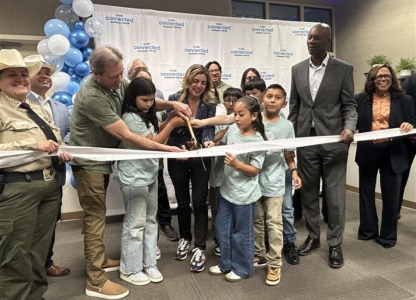
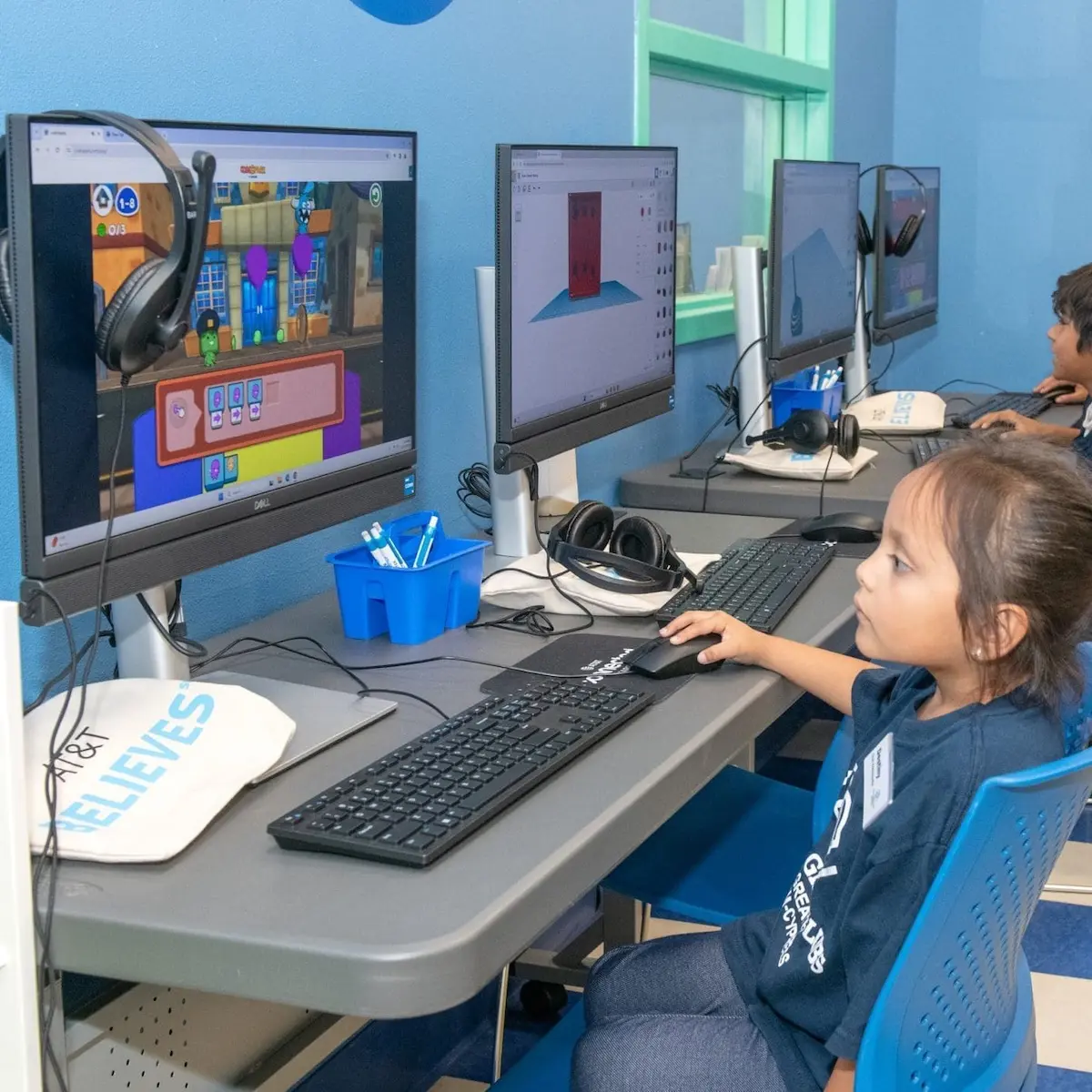
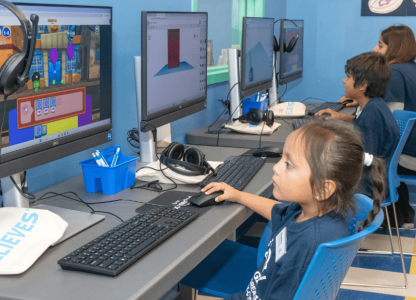
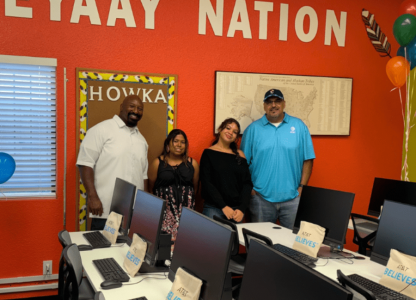
In California this year, we opened 3 new AT&T Connected Learning Centers, including 2 on Tribal land. That’s a total of 7 Connected Learning Centers in California that provide internet access and computers, as well as educational resources that teach the skills needed to use it safely and responsibly.
To make this happen, we collaborated with community-based organizations that are adept at providing for the needs of the communities they serve, including Boys & Girls Clubs and California Tribal Nations.

Access to Digital Resources
Beyond access to technology, bridging the digital divide includes having the devices and skills to participate fully, safely, and responsibly in today’s digital world.
In California, it’s estimated that 21 percent of K-12 students1 don’t have digital basics at home, including access to the internet, computers or skills needed to benefit from the online world.
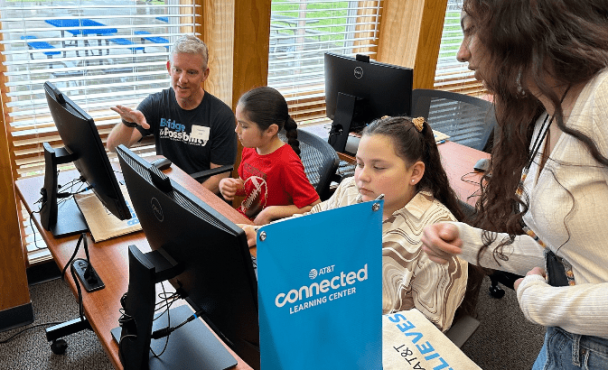
To help close that gap, in 2023, we collaborated with community-based organizations to donate more than 4,000 devices to California students and families to help them thrive in school and beyond. We are proud to work with these community organizations to close the digital divide:
| BAYCAT | 826 Valencia |
| Asian Resources Inc. | Center for Fathers and Families |
| Charity Cultural Services | Community Coalition of South Los Angeles |
| Concerned Black Men of Los Angeles | East Oakland Youth Development Center |
| emPOWERment | Familias Unidas |
| Family Promise Santa Clarita Valley | Homes 4 Families |
| La Jolla Band of Luiseño Indians | Mission Bit |
| Mission Girls | North Valley Boys & Girls Club |
| ONE Generation | Pala Band of Mission Indians |
| Paradise Teen Center | Pauma Band of Luiseño Indians |
| Rincon Band of Luiseño Indians | Sacramento LGBT Community Center |
| San Diego County YMCA | San Pasqual Band of Mission Indians |
| Southeast Community Development Corp. | The Fresno Center |
| The RightWay Foundation | The Salvation Army Kroc Center |
| The Village Project | Uptown Whittier YMCA |
| Vallejo Senior Citizens Council | Westchester YMCA |
Similarly, our philanthropic funding areas support digital inclusion, literacy, learning and employment solutions that help connect today’s learners with skills, resources and opportunities for success in school and in life. Our giving is designed to impact predominantly underserved, under-represented and low-income communities.
In 2023, our company donated more than $3.5 million to California nonprofit organizations, including $1.6 million to organizations that are providing innovative digital literacy trainings, programs, resources and solutions to connect underserved communities.
- California Emerging Technology Fund (CETF) – Our financial help is supporting CETF’s efforts to help 100 low-income households across the state get connected to the Internet and become digitally skilled. The program’s Digital Navigators will connect individuals and families to computing devices, Internet access, and digital literacy training, all in an effort to help close the digital divide.
- Anthony’s Tech Lab – Our support of St. Anthony’s Tenderloin Tech Lab (TTL) in San Francisco is helping support the neighborhood’s most accessible technology center, providing computer access and education to all. Committed to bridging the digital divide, TTL believes that everyone deserves access to the tools of modern life — whether they want to build employment skills, access other free resources in the Bay Area, or connect and reconnect with family and friends.
Building Digital Literacy Skills
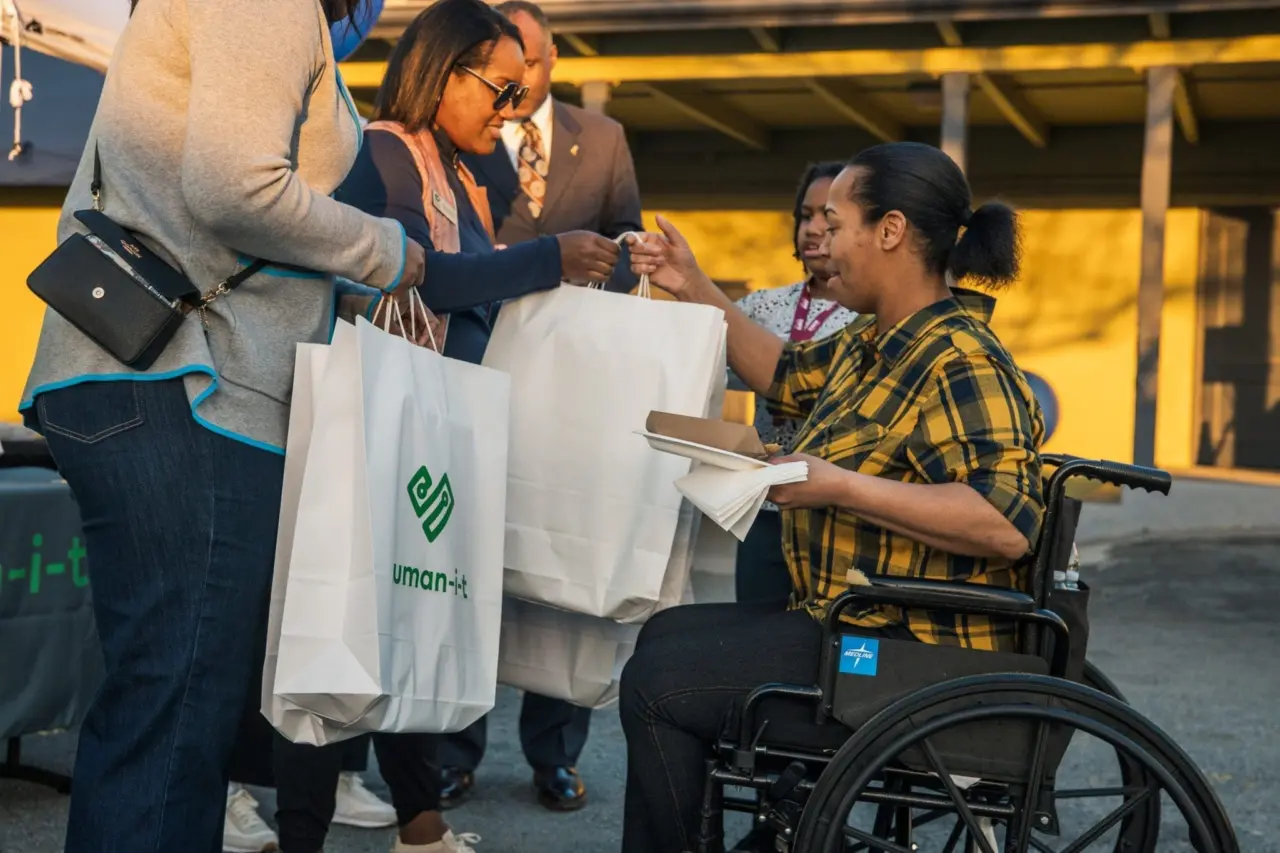
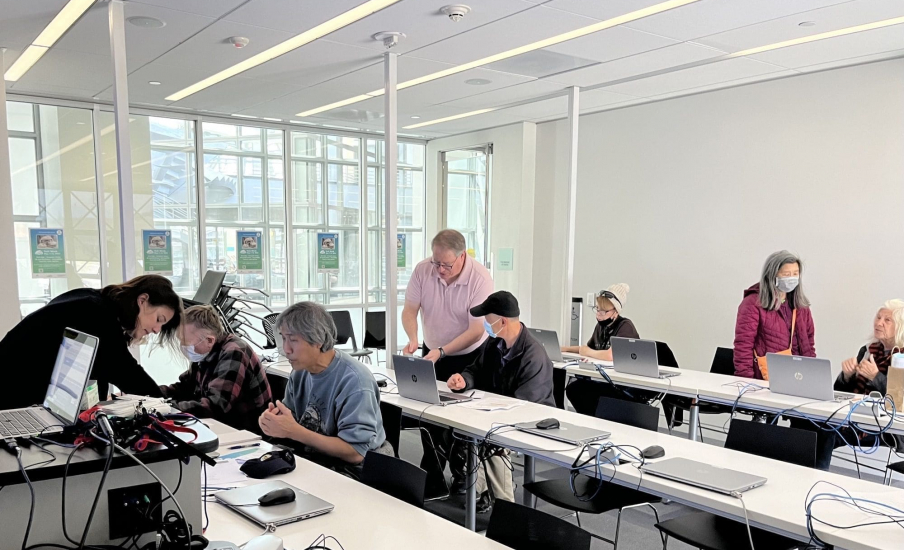
Digital literacy workshops are designed to help newly connected parents and families build the skills and confidence they need to support online learning and engagement. This year, AT&T has hosted nearly a 100 digital literacy workshops across the state, including in South Los Angeles, where we hosted four Spanish-language digital literacy sessions for the community at our AT&T Connected Learning Center at the Salvadoran American Leadership Education Fund (SALEF).
These in-person community workshops teach basic digital literacy skills, including how to use computers and mobile devices; how to use common apps such as search engines, email and video conferencing; and how to stay safe online and avoid scams and fraud.
Access to High-Speed Internet
We’ve been investing in California for 145 years. We invested nearly $8.6 billion in our wireless and wireline network infrastructure from 2020-2022 to connect more people to greater possibility. Our investments include wireless network upgrades, including the public safety network—FirstNet®, Built with AT&T. We’re also focused on building our fiber network to meet the demands for reliable, high-speed connections today and in the future. Today, there are more than 3 million customer locations in California with AT&T Fiber and more than 475 communities where first responders are staying connected with FirstNet.
Access to Affordable Internet
To help bridge the digital divide in California, we’re not only investing in our networks to increase internet access, but we’re also focusing our efforts to increase internet affordability and adoption.
To help lower the cost of the internet for Californians, we’re committed to providing affordable solutions, including through our participation in the Affordable Connectivity Program (ACP) and our low-income home internet offering, Access from AT&T.2 By combining the latest low-cost Access from AT&T plan with the ACP’s $30 benefit, eligible households can reduce their monthly cost for internet to $03.
We’ve collaborated with community groups at events, conducted community outreach and marketing across the state to promote ACP and sign-up eligible customers. As part of Get Connected! California, a statewide mobilization to promote the ACP, we participated in numerous community events across the state, helping individuals and families sign-up to ACP to lower the cost of broadband.
Currently, 2.7 million households in California have enrolled in the ACP.4
AT&T is 100% committed to bridging the digital divide in California. We will continue to invest in our network and programs to help bridge the digital divide in communities throughout California, all aimed at improving digital literacy and access to affordable technology.
2 Available in the 21 states where AT&T offers wireline home internet services
3 Plans up to 100 Mbps. Free internet subject to continued participation in the ACP and application to Access plans. Limit of one ACP benefit per household
4 ACP Enrollment and Claims Tracker – Universal Service Administrative Company (usac.org)
Related stories
Addressing the digital divide
Honoring Native American Heritage: Bridging the Digital Divide in California Tribal Communities

