
For 150 Years, Connecting Georgians Has Been Our Calling
Modernizing network infrastructure
For 150 Years, Connecting Georgians Has Been Our Calling
Riley BlountPresident, AT&T Georgia
March 10, 2026
Riley BlountPresident, AT&T Georgia
March 10, 2026
Key insights
01
On March 10, 1876, Alexander Graham Bell made the first successful telephone call, launching a technology that would forever change how people connect and sparking innovations that continue to change the world.
02
Alexander Graham Bell invented the telephone in 1876 and just three years later, in 1879, the first Bell-licensed telephone exchange in Georgia opened in Augusta, giving neighbors, businesses and communities a new way to communicate.
03
From the first Georgia exchange in Augusta to a historic moment on Jekyll Island to Atlanta’s modernization milestones to ground-breaking technologies in Americus, Georgia has been part of AT&T’s story for nearly as long as there’s been a story to tell.
At AT&T, we’ve been connecting Georgia communities for nearly 150 years. Today, we celebrate the moment that started it all.
On March 10, 1876, Alexander Graham Bell made the first successful telephone call, launching a technology that would forever change how people connect and sparking innovations that continue to change the world.
That historic call led to the creation of the Bell Telephone Company, which eventually became American Telephone & Telegraph and today’s modern AT&T.
It also ushered in a new era of connection, one that runs through Georgia – a place where new ideas were put to work on city streets, across small towns and in moments that helped shape how Americans communicate.
A history of connection and innovation in Georgia
Alexander Graham Bell invented the telephone in 1876 and just three years later, in 1879, the first Bell-licensed telephone exchange in Georgia opened in Augusta, giving neighbors, businesses and communities a new way to communicate.

Original list of subscribers for the first Bell-licensed telephone exchange in The Chronicle & Constitutionalist, Augusta, Georgia, March 18, 1877.
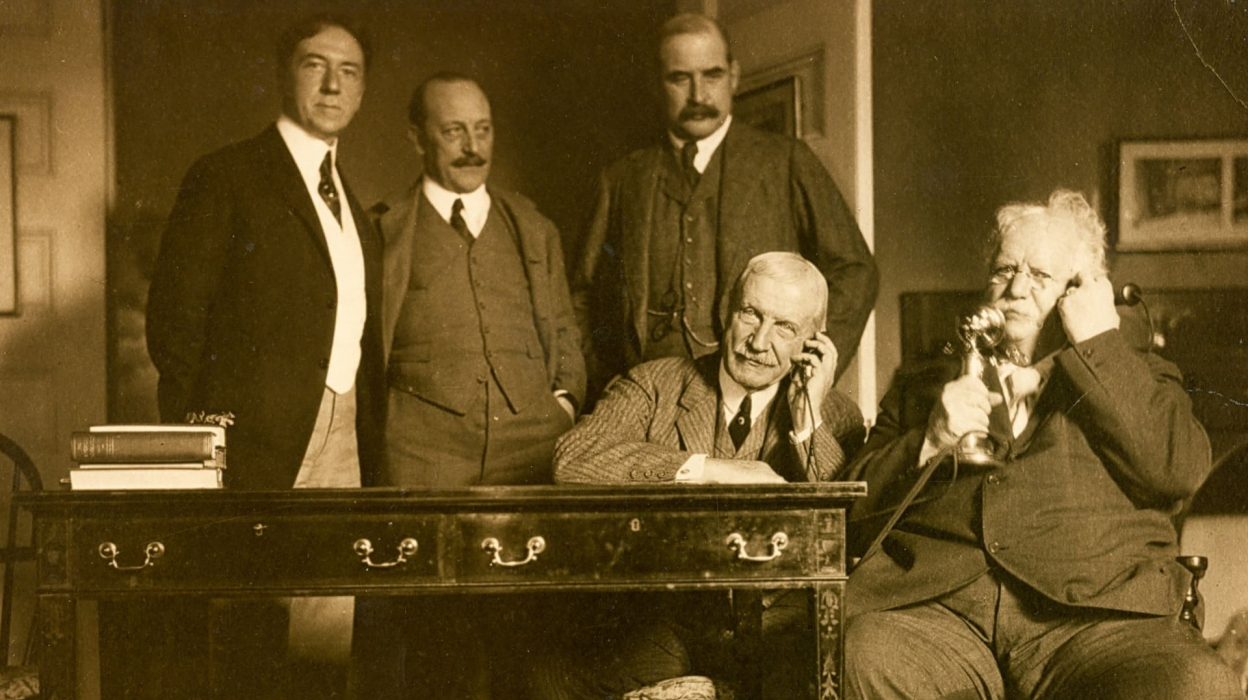
In 1915, the first transcontinental telephone line opened for service, connecting New York and San Francisco. Alexander Graham Bell, in New York, called his former assistant Thomas Watson in San Francisco. President Woodrow Wilson joined by telephone from the White House, AT&T President Theodore Vail joined by telephone from his winter home on Jekyll Island and businessman and philanthropist Henry Higginson joined in Boston.
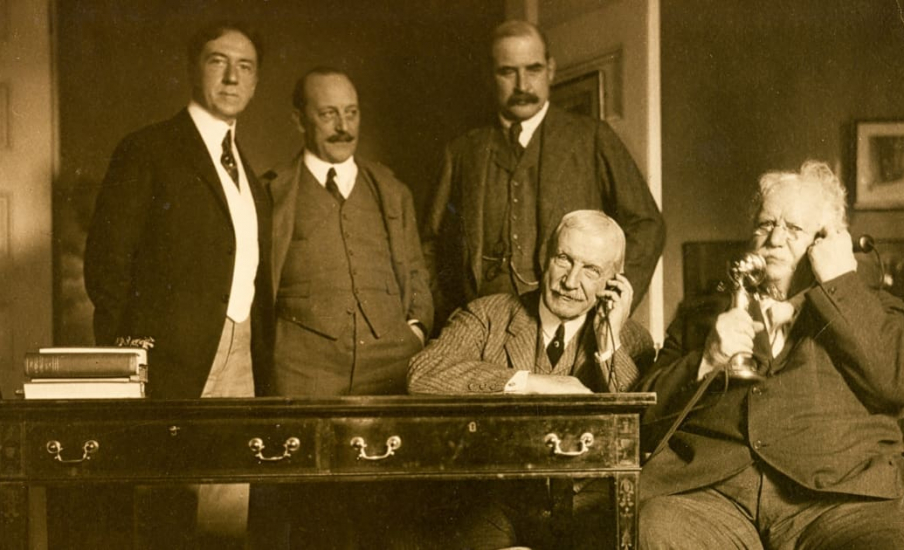
AT&T President Theodore Vail placing ceremonial call on the first transcontinental telephone line, Jekyll Island, Georgia, January 15, 1915.
This five-way exchange demonstrated real-time conversations across the country were possible and marked the beginning of a new chapter in long-distance service.
As Americans came to rely more and more on the telephone, expectations expanded. People wanted calls to go through more quickly, long-distance to feel less complicated and service to be built for growing cities and busy households.
Georgia helped meet that moment.
In 1923, Southern Bell introduced dial service in Atlanta for the first time using a Panel Switching System, one of the steps that moved communities away from manual connections and toward a more self-service experience. In 1952, AT&T introduced nationwide Operator Toll Dialing in Atlanta, an important leap in the evolution of long-distance calling. In 1967, Atlanta received its first electronic, computer-controlled switching system: the No. 1 ESS, installed in a new building on Peachtree Place in Midtown Atlanta. This was a major shift toward the kind of digital, software-driven networks we now depend on every day.
These weren’t just equipment upgrades. They were significant turning points in how Georgia families, businesses and communities communicated.
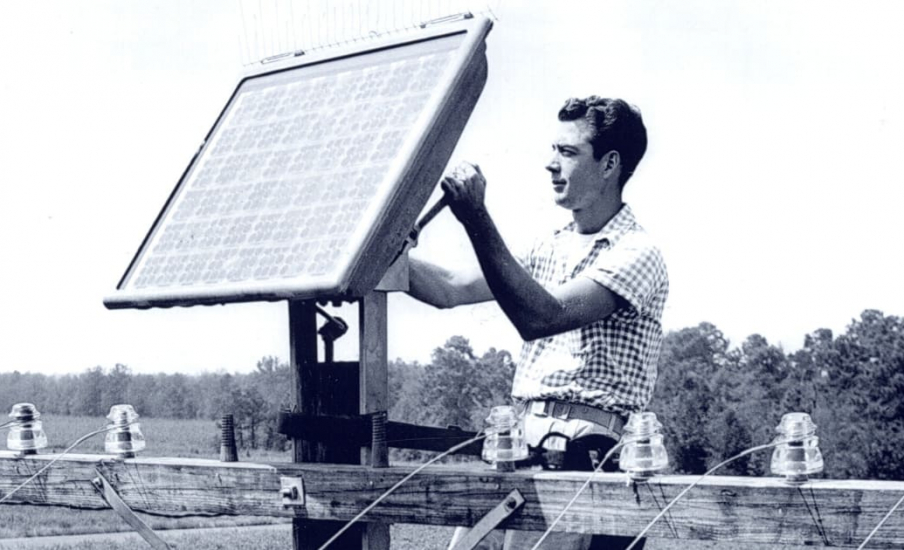
Bell Solar Battery, Americus, Georgia, 1955.
AT&T’s history of innovation includes groundbreaking discoveries from Bell Labs, the research and development arm of the Bell System. In 1947, Bell Labs scientists invented the transistor – the tiny semiconductor that became the foundation for the modern electronics and communications technologies we know today. Researchers also developed the first practical solar cells in the 1950s, helping launch modern solar energy. Georgia played an instrumental role in the development of these technologies when engineers from Bell Labs conducted field tests of the transistor and the solar battery in Americus.
Together, these innovations expanded telephone service in rural communities. This work stands as an early example of AT&T’s commitment to connecting people regardless of geography.
Building a network that connects people when it matters most
In 1968, AT&T helped establish the first 911 system, improving emergency response times and laying the groundwork for the way Americans reach help in critical moments.
More recently, in 2017, AT&T partnered with the federal government to build FirstNet®, Built with AT&T, America’s first and only nationwide public safety communications network. Today, FirstNet covers more first responders than any other network, giving public safety always-on priority and preemption, plus innovative, mission-critical capabilities when they need them most.
Investing in Georgia’s future
From the first Georgia exchange in Augusta to a historic moment on Jekyll Island to Atlanta’s modernization milestones to ground-breaking technologies in Americus, Georgia has been part of AT&T’s story for nearly as long as there’s been a story to tell.
Today, AT&T remains committed to Georgians.
From 2020 to 2024, AT&T invested more than $16.9 billion in our Georgia network infrastructure.
As a result of this investment, we recently announced AT&T Fiber availability to more than two million homes and small businesses in more than 150 Georgia communities. And, AT&T 5G is available to 95% of Georgians – delivering faster speeds and enhanced capacity.
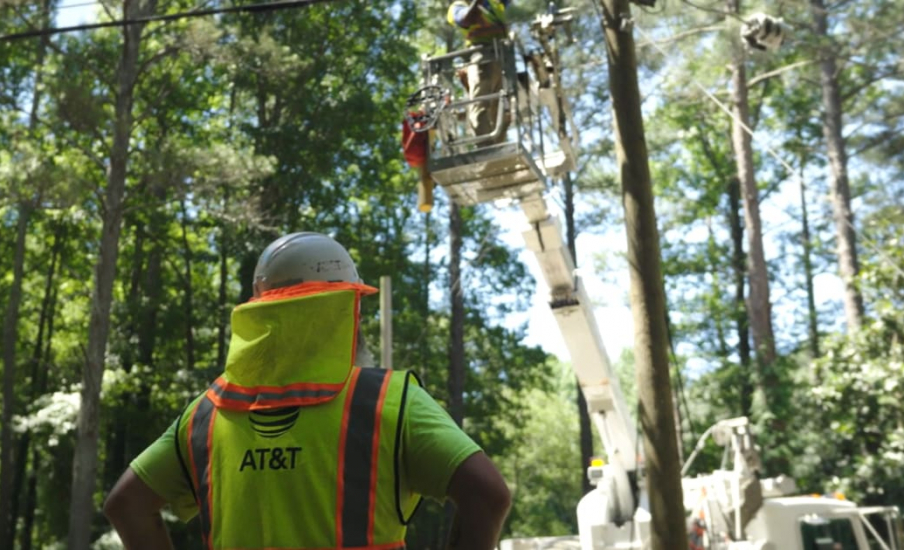
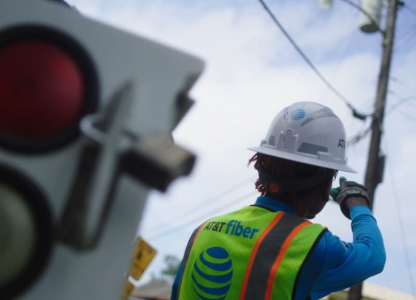
AT&T technicians install fiber in Clayton County, Georgia, 2025.
Our innovation continues to accelerate as technologies like artificial intelligence, connected vehicles and advanced manufacturing reshape the way people communicate and do business. Reliable, high-speed connectivity will remain at the center of that transformation.
From the first telephone call more than a century ago to today’s modern fiber and 5G networks, AT&T continues to connect Georgians to greater possibility, and the best is yet to come.
First three images courtesy of AT&T Archives and History Center
Related stories

Addressing the digital divide
Opening Doors to Opportunity: A New AT&T Connected Learning Center Opens in Savannah

